How To Search for Norfolk Property Records

Norfolk's combination of historic neighborhoods, waterfront living, and economic activity makes it an attractive coastal real estate market. Notwithstanding this, you should always do your due diligence before buying or investing in property in the city. Reviewing property records is an effective way to do this. These records contain valuable information, including ownership history, tax assessments, zoning classifications, liens, foreclosures, amenities, and other details that you can use to make informed decisions. Norfolk property records are public records, meaning they are available to anyone who wishes to view or obtain copies. The key is knowing where to look. Below is a list of resources you can use to locate different types of Norfolk property records.
Norfolk Circuit Court Land Records Division

The Norfolk Circuit Court Land Records Division is the custodian of official records that document land and property ownership and interests in the City of Norfolk, such as deeds, mortgages, liens, and homestead exemptions. The division offers a Land Records Secure Remote Access platform that you can use to search for these records online. Note that this is a subscription-based service, meaning that you will need to register an account and pay a subscription fee. You may also obtain copies of records by either submitting an online document request or by visiting the division in person at 150 St. Paul's Blvd., Norfolk, VA 23510. You can call (757) 389-8942 for assistance or general inquiries.
Norfolk Real Estate Assessor's Office

The Norfolk Real Estate Assessor's Office is responsible for identifying, listing, and determining the taxable value of all real estate within the city. This office serves as a primary resource for property ownership information, assessed values, parcel descriptions, building characteristics, sales history, and related property data. You can look up this information online using the Norfolk Address Information Resource (AIR) property search tool; searches may be performed by address, account number, or GPIN. You can also visit the assessor's office at Room 402, 810 Union St., Norfolk, VA 23510 to access records in person or call (757) 664-4732 for inquiries and general assistance.
Norfolk Treasurer's Office
The Norfolk Treasurer's Office handles property tax billing and collection for the city, making it a key resource for tax-related property records, including billing statements, payment histories, delinquent accounts, and other related information. You can use the office's eBilling portal to search and view tax bills online. Searches are typically done by name and account number. In-person services are also available at the treasurer's office, located at 810 Union St., 1st Floor, Norfolk, VA 23510. You may also call (757) 664-7800, (757) 664-7849, or email CT-REINQUIRY@norfolk.gov for general inquiries and assistance.
Norfolk Courts

The Norfolk Courts (specifically the Circuit and General District Courts) are valuable resources for information on property-related legal matters, such as foreclosure proceedings, boundary disputes, landlord-tenant cases, and civil judgments that affect title and property use in the city. Most of these records can be accessed online through the statewide Virginia Judiciary Online Case Information System. You can also visit the courthouse at 150 St. Paul's Boulevard, Norfolk, VA 23510, to view and request copies in person. For more information, call the Norfolk Court Clerk's Office at (757) 389-8942. Inquiries may also be directed to the General District Court at (757) 664-4913 or (757) 664-4914.
Norfolk Property Taxes
Norfolk property taxes fund essential municipal services, including public schools, police and fire protection, emergency response services, parks and recreation, health programs, roadway maintenance, and other city operations. The city's Real Estate Assessor's Office identifies and values properties for tax purposes, while the Treasurer's Office bills and collects taxes. Property values are established using recognized appraisal methods, including comparable sales analysis, cost approaches, and income-based valuation for income-producing properties. Tax bills for each property are calculated by multiplying its assessed value by the real estate tax rate set annually by the Norfolk City Council.
Property taxes are billed on a quarterly basis, with payments due on September 30th, December 5th, March 31st, and June 5th. Bills are typically mailed at least 30 days before the due date. Late payments incur a penalty of 10% or $10.00, whichever is greater, and interest begins accruing at 8% per year on outstanding balances until paid in full. Long-term delinquency may result in additional penalties and possible foreclosure. The Norfolk Treasurer's Office offers multiple payment options, including online payments, mail-in, phone payments (by calling (855) 766-3030), and in-person transactions. You can call the office at (757) 664-7800 or (757) 664-7849 for assistance.
![]() Assessments
Assessments

The Norfolk Real Estate Assessor's Office conducts annual property assessments to determine the value of real estate throughout the city and ensure fair and consistent taxation among property owners. The assessment process includes field inspections, analysis of recent sales activity, market trend evaluations, and the use of mass appraisal techniques to estimate fair market value. Three primary valuation methods are applied: the market approach, which compares a property with similar recently sold properties; the cost approach, which estimates value based on construction and replacement costs; and the income approach, which evaluates value based on income-producing potential. Properties in Norfolk are assessed at 100% of their estimated fair market value, meaning property taxes are calculated using the full assessed amount rather than a reduced percentage. Assessments are based on the property's value as of January 1st.
Property owners are typically mailed assessment notices by April 1st outlining their property's assessed value and classification. If you believe your assessment is inaccurate, you may call the assessor's office at (757) 823-1343 to schedule an informal appeal. Note that the window for informal appeals closes on May 8th each year or the next business day if May 8th falls on a weekend or legal holiday. If the issue cannot be resolved informally, you may file a formal appeal with the Norfolk Board of Equalization; this must be done on or before the last day of May. You can contact the assessor's office at (757) 664-4732 for additional information or assistance.
![]() Appraisals
Appraisals

Norfolk assessments work similarly to appraisals. They both determine the fair value of property by comparing similar properties with others in the local area that have sold recently. In cases of odd structures or new construction, the county may call upon an appraiser to help determine the value. Estate planners, courts, and lenders also use appraisals to value real property.
![]() Tax Rates
Tax Rates

The median effective property tax rate in Norfolk, Virginia, is 1.25%, above both the national median of 1.02% and the Virginia state median of 0.89%. The city's average annual tax bill is $3,116, which is also higher than the national average of $2,400.
Here's a look at how Norfolk's tax rate compares to other counties in Virginia:
- Arlington County 1.03%
- Chesterfield County 0.92%
- Fairfax County 1.14%
- Fauquier County 0.91%
- Henrico County 0.85%
- Loudon County 0.88%
- Prince George County 0.76%
- Prince William County 1.04%
- Tazewell County 0.58%
- Warren County 0.49%
- York County 0.77%
![]() Exemptions
Exemptions

Property taxes in Norfolk are generally higher than the national average and can be a significant expense for some homeowners. Thankfully, the city offers several tax relief programs designed to offset the burden for qualifying residents. Common exemptions include:
-
Real Estate Tax Relief Program: Provides partial or full tax exemptions for homeowners aged 65+ or totally disabled who occupy their property as their primary residence and meet specific income and net worth requirements.
-
Disabled Veterans Exemption: Grants full real estate tax exemption for veterans with a 100% service-connected, permanent, and total disability. Unremarried surviving spouses of these veterans may also qualify.
-
Surviving Spouse Exemptions: Available to surviving spouses of United States Armed Forces members and first responders killed in action or in the line of duty.
You can contact the Norfolk Department of Human Services at (757) 664-6000 or (757) 823-1130 for additional information on real estate tax relief programs or assistance with applying.
Norfolk Building Permits/Inspections
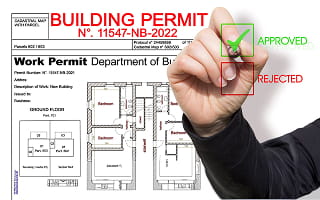
Permits are required for most construction, repair, alteration, addition, and renovation projects in Norfolk. Certain projects may be exempt, such as 1- and 2-family residential re-roofs, replacing windows of the same size, installing cabinets and floor coverings, minor repairs to decks, and non-structural cosmetic updates like painting, wallpapering, and trim work. The Norfolk Department of City Planning oversees the city's permitting process. Applications, document uploads, inspection scheduling, and fee payments can be completed online through the city's E-Permitting Portal (note: first-time users must register an account to access the portal). In-person services are also available at the Development Services Center, located at 810 Union Street, Norfolk, VA 23510. You may call (757) 664-6565 or email planreviewpermits@norfolk.gov for permit inquiries and general assistance.
Common types of permits issued in Norfolk include:
-
Building Permits: Required for construction, alteration, or repair of residential or commercial structures.
-
Electrical Permits: Required for installation or modification of electrical wiring and systems.
-
Plumbing Permits: Required for work involving water supply, sewer, drainage, and other plumbing systems.
-
Mechanical Permits: Required for heating, ventilation, and air conditioning (HVAC) systems installation or modification.
When applying for any of these permits, you must submit the proper documentation (building plans, blueprints, contractor licenses, materials lists, etc.). You must also pay the appropriate fee.
Building inspections are part of the permit process, and they ensure that the work complies with local building and safety codes. You can schedule an inspection through the online portal or in person at the office during regular business hours.
Real Estate in the City of Norfolk

Norfolk is a historic coastal city strategically located at the confluence of the Elizabeth River and Chesapeake Bay, serving as a key commercial, urban, and cultural center in the Tidewater Region. The city is widely recognized for its port operations and strong naval presence and is home to the world's largest naval base, NATO's North American Headquarters, and the historic USS Wisconsin Battleship. In addition to this, it features attractions like the Norfolk Botanical Garden, Chrysler Museum of Art, Virginia Zoo, and over a hundred miles of riverfront, bayfront, and beach areas, all of which contribute to its appeal for both tourism and residential living.
Norfolk, Virginia, has a population of 238,005 residents and 105,559 housing units, with about 90% of these units occupied and 44% owner-occupied. The city offers a wide range of housing options, including historic single-family homes, luxury waterfront properties, townhomes, rowhouses, condominiums, apartments, and mixed-use urban developments. Common housing styles include Colonial, Georgian Revival, Craftsman, Cape Cod, Tudor Revival, Mid-Century Modern, and Coastal Contemporary. The average home value in Norfolk, VA, is $300,053, reflecting a 0.2% increase from previous years. Note that actual values may vary across neighborhoods. Here are examples of home values in different Norfolk neighborhoods:
- Belvedere $421,737
- Cromwell Farms $412,000
- Greenhill Farms $278,658
- Inglenook $238,263
- Lakewood $673,497
- Roland Park $269,114
- Sewells Gardens $267,989
The Norfolk, Virginia, real estate market is a moderately competitive market, with strong demand and relatively stable prices. Homes typically go under contract within about 38 days, and approximately 36% of these homes sell above the listing price.
Searching across multiple government offices and databases to piece together a complete property profile can be time-consuming, but PropertyChecker simplifies the process by pulling key ownership details, tax records, transaction histories, and more into a single, easy-to-use platform. Whether you are buying, investing, or simply doing your due diligence, visit PropertyChecker.com to get the property information you need in minutes.